

Compassionate Leadership: The Key to Creating School Belonging
In the ever-evolving landscape of educational leadership, the concept of school belonging has emerged as a pivotal aspect of a student's academic and personal development. As we navigate through an unpredictable era shaped by the global pandemic, it becomes imperative to reassess our models of leadership within educational settings. Compassionate leadership has shown itself not only as a beneficial approach but as a cornerstone for fostering an environment where every member feels they truly belong.
The New Era of Educational Leadership
The COVID-19 pandemic has undeniably transformed various facets of our lives, with education being no exception. Schools are traditionally seen as beacons of stability, yet they are now tasked with the monumental challenge of adapting to the shifting sands of crisis management. This period of tumult has highlighted the importance of school leaders' roles in cultivating a sense of connectedness and security among their staff and students.
The Essence of Belonging
Belonging is more than just being part of a group; it's about feeling seen, understood, and valued. It's about creating an environment that supports and nurtures every individual's identity and well-being. In this light, school leaders are faced with two distinct choices:
- A school that is open and inclusive, encouraging connectivity and mutual support.
- A closed off institution where individuals feel isolated or marginalized.
The direction chosen significantly impacts not only the academic performance but also the holistic development of young people.
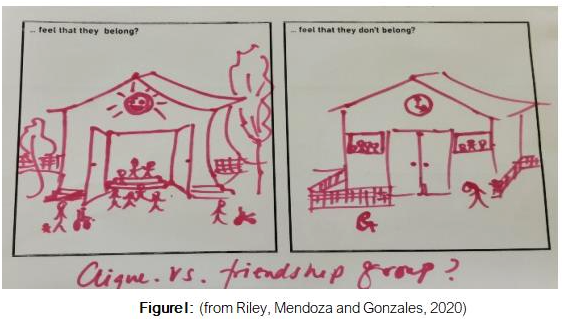 An illustrative depiction of the stark differences between inclusive and exclusive school environments.
Compassion, Connectivity, Communication: A Triad for Success
As we delve deeper into what constitutes effective leadership during these trying times, three core practices emerge—compassion, connectivity, and communication. These elements form a triad that acts as a foundation for compassionate leadership:
- Compassion: Understanding self and others' challenges, creating an empathetic community.
- Connectivity: Building bridges within and outside the school community to foster inclusion.
- Communication: Open dialogue that builds trust and encourages meaningful interactions.
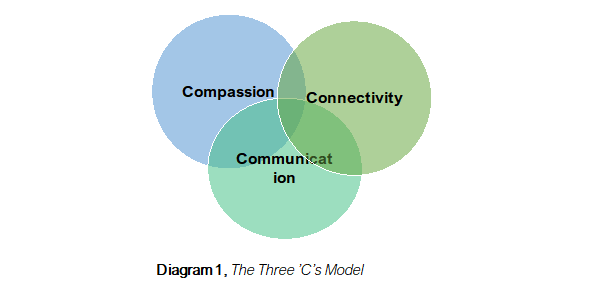 The Three 'C's Model: where compassion, connectivity, and communication intersect in educational leadership.
Journeying Beyond Uncertainty: The Role of Compassionate Leaders
The lingering effects of the pandemic provide us with insights into systemic flaws within our educational frameworks. Resilience emerges as a critical theme requiring reinvigoration at all system levels—from policy-making to classroom interactions. Compassionate leadership plays an integral role in unlocking potential solutions that hinge on resilience-building among students and staff alike.
Navigating Leadership Models Post-Pandemic
In post-pandemic reflection, we observe two predominant models in educational leadership:
- A relational model rooted in kindness, empathy, and understanding.
- An authoritarian model marked by rigidity, control, and stringent discipline policies.
The choice between these models dictates the trajectory towards either fostering belonging or perpetuating exclusion within school communities.
Moral Imperatives in Leadership Practices
Educational leaders are increasingly recognizing their role not just as administrators but as moral stewards responsible for nurturing inclusive environments where everyone can thrive. This is not merely about academic metrics; it's about championing spaces where relationships flourish on mutual respect and acknowledgment.
 Fostering professional collaboration is key to progressing towards compassionate education practices.
Rethinking Discipline: From Exclusion to Inclusion
Schools that prioritize belonging over punitive discipline strategies witness transformative effects on their community members' overall well-being. Rather than relying on exclusionary practices such as 'zero tolerance' policies which often exacerbate alienation among students already facing challenges in their lives,
 A sincere discussion amongst educational professionals highlights the shift towards compassion-centered strategies.
The Call for Compassionate Leadership Today
In our current social milieu characterized by uncertainty and complexity,
- We must embrace compassionate leadership that values emotional intelligence alongside academic excellence.
- We need leaders who are willing to step into ambiguity with courage while holding onto values that foster community cohesion.
- We should encourage practices that build resilience through connection rather than division.
- We must recognize that belonging is paramount—for both students' growth and educators' satisfaction.
If you're interested in exploring more about how compassionate leadership can transform your school into a place where everyone feels they belong,
Contact Teaching Times Training at +44 121 224 7599 or visit us in Pershore Street for Achievement Training sessions designed to inspire change.
Join us on this journey—it's time to reimagine what leadership looks like in our schools today.
