

In a world that's evolving at breakneck speeds, the capacity to learn and adapt is more crucial than ever. It's not just about acquiring new skills but also understanding the very nature of learning itself—this is where the concept of meta-learning enters the stage. This powerful tool holds the potential to transform individuals into lifelong learners, equipping them with the ability to self-reflect, adapt, and grow in any professional landscape.
Understanding Meta-Learning
Before we delve into practical applications, let's clarify what we mean by meta-learning. Simply put, meta-learning is 'learning about learning.' It's an introspective process that involves scrutinizing how you acquire knowledge, understand concepts, and apply them effectively. It enhances your ability to be self-directed and take control of your learning experiences.
The Four Pillars of Meta-Learning
Meta-learning rests on four foundational pillars:
- The Learner: Focusing on personal growth and understanding one's own learning preferences.
- The Learning Process: Embracing change through structured learning conversations that lead to transformation.
- The Learning Context: Acknowledging the significance of the social and organizational environment in which learning occurs.
- Learning About Learning: Reflecting on and making sense of the learning process itself.
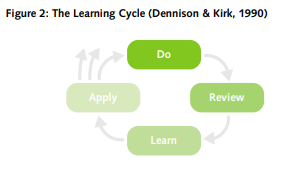 The Learning Cycle is a fundamental component in understanding how we process and apply knowledge. (Dennison & Kirk, 1990)
Mentoring and Coaching: Catalysts for Meta-Learning
Mentoring and coaching have emerged as vital facets in nurturing a meta-learning environment. Both serve as conduits for not only transferring knowledge but also fostering an atmosphere where reflective practice is encouraged and valued.
Mentoring: The Sustained Support System
Mentors act as guides through our professional journeys. They aid in navigating complex career landscapes by sharing wisdom gleaned from experience. The mentorship relationship blossoms over time, becoming a source of sustained support for personal development.
Coaching: The Targeted Approach for Skill Enhancement
In contrast, coaching tends to be more skill-specific and goal-oriented. Coaches assist professionals in honing particular competencies or managing targeted projects with an emphasis on performance improvement.
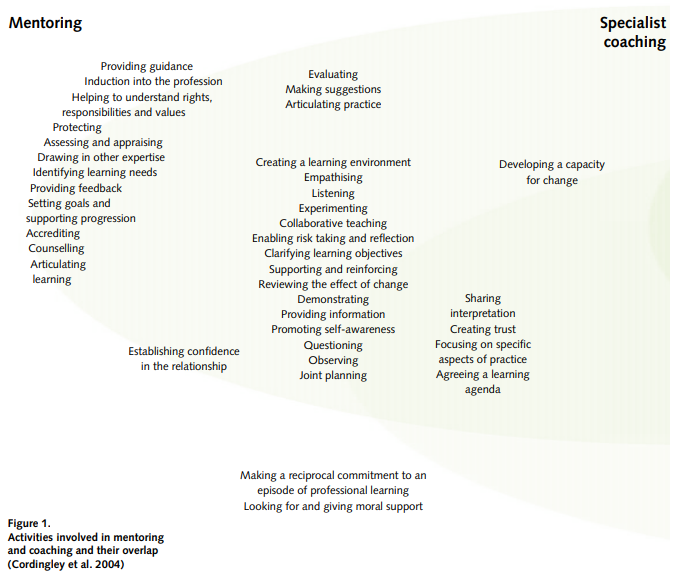 A Venn diagram illustrating the commonalities between mentoring and coaching activities. (Cordingley et al., 2004)
Cultivating a Meta-Learning Environment Through Dialogue
The linchpin of creating a meta-learning environment lies within structured dialogues—learning conversations—that mentors or coaches facilitate with their mentees or coachees. These conversations are designed to be reflective and promote insight into one's own learning processes.
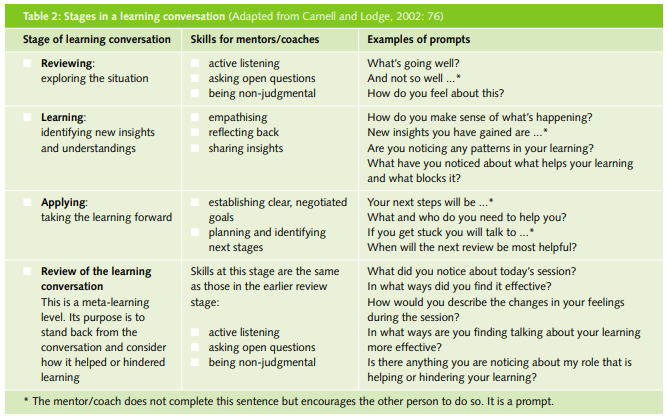 A table highlighting stages in a learning conversation with examples of prompts to guide mentors and coaches. (Adapted from Carnell and Lodge, 2002)
Leveraging Models for Effective Learning Outcomes
To enhance the potency of these dialogues, we can leverage various models that elucidate how learning unfolds:
- Instruction Model: Traditional teacher-centered approach focusing on direct teaching techniques.
- Construction Model: Learner-centric model emphasizing understanding through personal interpretation of experiences.
- Co-construction Model: Social model fostering collaborative knowledge building through dialogue among peers.
In these models, especially within construction and co-construction frameworks, the roles become less hierarchical; mentors often learn alongside their mentees in a symphony of shared discovery.
Beyond Knowledge Transfer: The Impact on Professional Practice
The impact of incorporating meta-learning strategies extends beyond mere knowledge acquisition—it fosters resilience and adaptability within professionals. By engaging with meta-learning practices:
- You become adept at self-assessment—a critical skill in identifying areas for improvement.
- You begin to appreciate different perspectives—a gateway to enhanced collaboration and innovation.
- You learn to navigate ambiguity—an essential quality for leadership in uncertain times.
Taking Ownership of Your Learning Journey
Taking ownership means recognizing that you're responsible for your growth trajectory. With tools like reflection journals or structured conversations with mentors/coaches, you can take charge by critically assessing your steps towards achieving your goals.
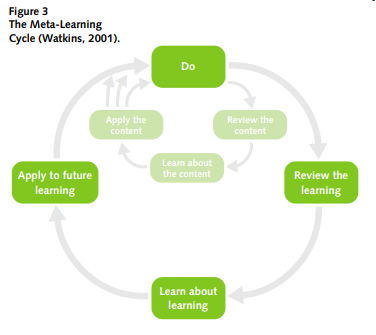 The Meta-Learning Cycle visualizes both content acquisition and introspection on the learning process itself. (Watkins, 2001)
Closing Thoughts: Embrace Change Through Learning
In conclusion, meta-learning isn't just an academic concept; it's a practical approach that can revolutionize your professional life. By reflecting on how you learn, seeking guidance from mentors/coaches who champion reflective practice, engaging in meaningful dialogue about your experiences—you set yourself up for continuous improvement amidst ever-changing work environments.
If this exploration into the depths of meta-learning resonates with you or if you're curious about how you can implement such strategies within your professional sphere, reach out! Let’s engage in a dialogue about advancing your career through intentional reflection and strategic action based on insights gleaned from this journey into knowing 'how we know.'
