

Revolutionizing Lesson Observations: A New Paradigm for Teacher Development
As an educator deeply embedded in the fabric of pedagogy, I have witnessed firsthand the transformative power of constructive feedback through lesson observations. The conventional method, though well-intentioned, often falls short of its noble goal—to enhance our teaching methodologies for the benefit of our students' learning journey.
The Current State of Lesson Observations
The prevailing practice of lesson observation tends to put educators under a microscope, scrutinizing their teaching methods in isolated instances which rarely represent the full scope of their abilities or the nuances of daily classroom dynamics. It's time we shift our focus towards nurturing an environment conducive to sustained professional growth.
- Understanding the limitations of one-off observations
- Nurturing a culture that values self-reflection over scrutiny
- Recognizing the diversity in teaching styles and student learning pathways
The Limitations We Must Acknowledge
Evaluating a teacher's impact based on a singular moment can be as limiting as trying to gauge a story's depth by reading only one page. It's akin to assessing an iceberg's enormity from its visible tip alone. To truly understand and support a teacher's professional journey, we need to consider the entire narrative—their strategies, their challenges, and most importantly, their continuous interactions with their students.
Fostering a Reflective Culture Over a Scrutinized One
To spark authentic improvement, we must transition from a culture of scrutiny to one that champions self-reflection. Educators are professionals who require trust and respect to thrive in their roles. By affording them autonomy over their developmental process, we empower them to pursue excellence in their craft.
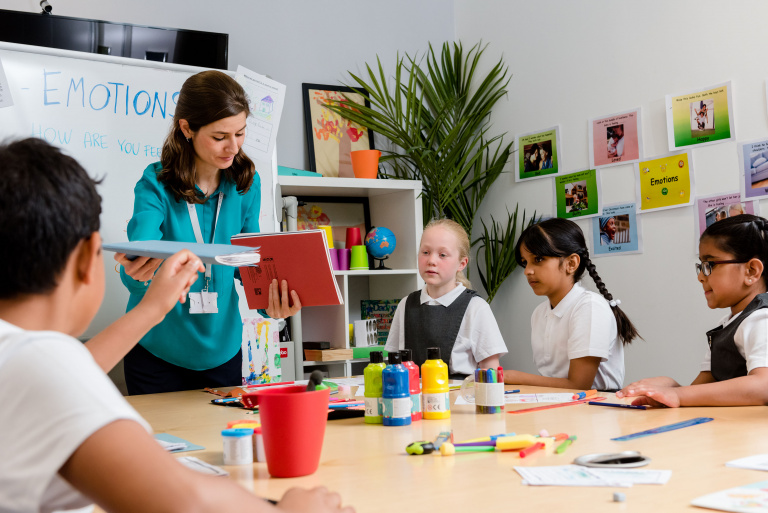 A female teacher actively engaging with her students, highlighting the importance of interactive teaching methods.
The Diversity of Teaching Styles and Learning Pathways
No two teachers are alike, nor are any two students—or indeed classes. The artistry behind successful education lies in recognizing these differences and crafting approaches that cater uniquely to them. This requires observers to possess an empathetic understanding of varying pedagogical styles without imposing one-size-fits-all criteria.
Proposing a New Framework for Observation
With insights drawn from years within classroom walls and leadership roles alike, I propose we revolutionize our approach to lesson observation. Let us usher in an era where these evaluations become collaborative rather than critical; supportive instead of stress-inducing.
- Integrating frequent formative assessments over infrequent summative ones
- Prioritizing pupil progress comprehension over teaching style critique
- Incorporating pre-observation dialogue for context and clarity
The Case for Formative Assessments
Rather than relying solely on sporadic summative assessments that often evoke anxiety and offer limited insights, we should embrace regular formative assessments—dialogues that offer real-time feedback and foster continual growth.
Pupil Progress: The True North Star
The ultimate measure of our success as educators is not found in how entertainingly we deliver lecture material but in how effectively our students absorb it. It's imperative that lesson observations place greater emphasis on the learning outcomes rather than the theatrics of delivery.
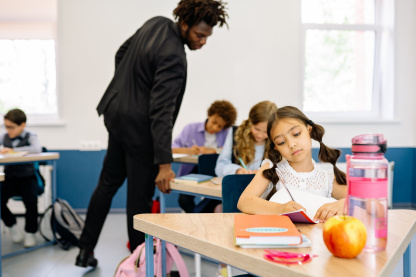 An observer taking part in the classroom dynamic offers valuable insight into student engagement levels.
The Vitality of Pre-Observation Dialogue
A prelude conversation before the eyes set upon the classroom can unravel layers of context that are indispensable for fair assessment. Understanding where a lesson fits into the broader curriculum helps observers align their expectations with realistic educational objectives.
Navigating Toward Better Outcomes with Technology
In an era where technology intertwines seamlessly with education, it provides us with tools such as discreet cameras that allow educators to self-review and refine their methods dynamically—an advancement that could be pivotal in professional development.
- Leveraging technology for self-improvement practices
- Mitigating biases through objective self-assessment tools
- Cultivating professional autonomy by harnessing technological aids
Conclusion: Embracing Change for Educational Excellence
In conclusion, it is incumbent upon us as custodians of education to perpetually seek ways that enhance our ability to mold young minds better. By embracing change and implementing more compassionate approaches towards lesson observation, we not only uplift teachers but also ultimately enrich our students' educational experiences—a goal universally cherished across academia.
I invite you to join me on this transformative journey towards reimagining lesson observations as tools for empowerment rather than evaluation—together let's unlock the full potential inherent within every educator.
Your browser does not support JavaScript!
