
In the realm of education, the continuous development of teaching practices is pivotal to not only the growth of educators but also to the enrichment of student learning experiences. Among the myriad of professional development tools, lesson observation stands out as a profound instrument with the power to revolutionize teaching methods and cultivate an environment of shared learning and improvement within educational institutions.
The Multifaceted Advantages of Lesson Observation
At its core, lesson observation serves as a mirror reflecting the intricate dynamics of classroom interaction and instructional strategies. It offers a wealth of benefits that extend far beyond mere oversight:
- Encouraging self-assessment and reflective practice among teachers.
- Allowing a critical review of diverse pedagogical approaches.
- Identifying disparities in student engagement and achievement.
- Fostering a culture of knowledge exchange and collegial support.
- Providing fresh perspectives on student behaviors and needs.
- Setting calibrated benchmarks for learning outcomes and expectations.
- Promoting the enhancement of individual teaching styles and techniques.
The implementation of lesson observation is multifaceted, involving head teachers, fellow educators, and occasionally external observers. Each participant plays a unique role in this collaborative process, aiming to uplift the educational experience holistically rather than simply evaluating it.
Navigating Challenges in Lesson Observation
Despite its potential for positive impact, lesson observation can sometimes veer into contentious territory, stirring anxiety among teachers who may perceive it as an intrusive assessment rather than constructive feedback. The effectiveness of this practice hinges significantly on its execution — an overly critical or punitive approach can erode morale, stifle genuine teaching innovation, and even precipitate counterproductive behaviors aimed at temporarily boosting observation scores at the expense of long-term educational quality.
To circumvent these pitfalls, it is imperative to recognize that observations are but snapshots in time, not definitive assessments of a teacher's overall capabilities. They should be regarded as opportunities for growth rather than verdicts on one's career trajectory. A shift towards more empathetic, frequent, yet lower-stakes observations can encourage ongoing mentorship and professional camaraderie.
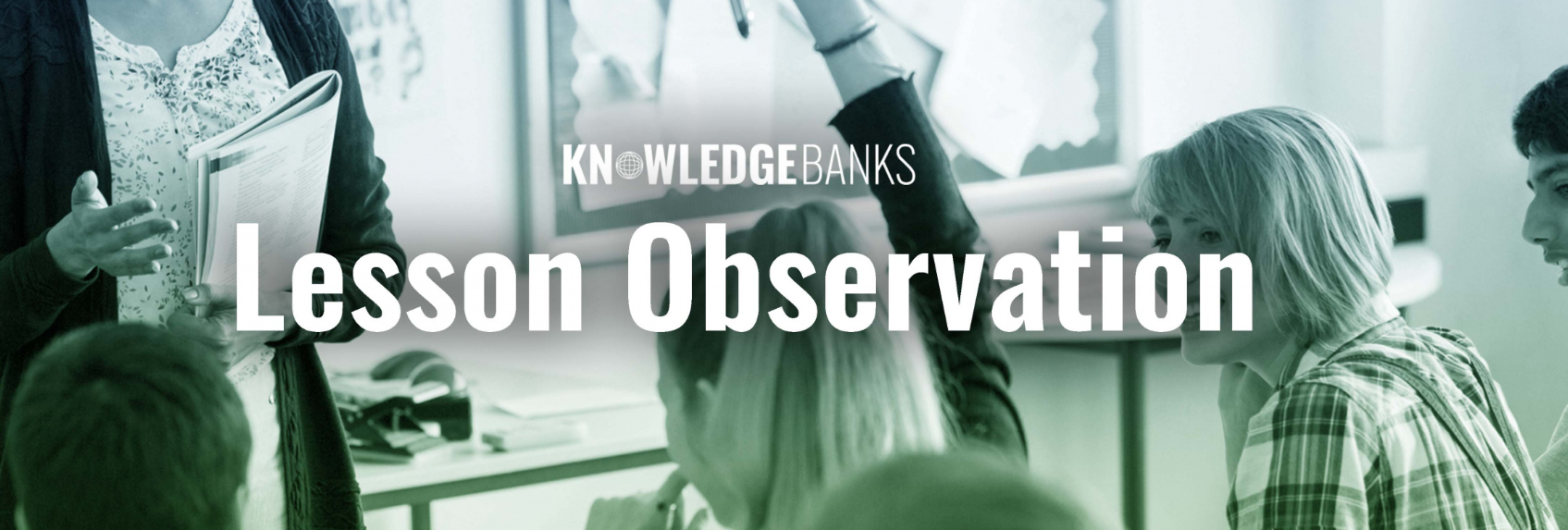 A moment captured during a lesson observation showing active student participation – Photo by Laura Ward
Fostering Constructive Feedback through Lesson Observations
Pivoting from judgmental overtones to a nurturing atmosphere is key in reaping the benefits of lesson observations. Tools like the i-WIGT (What Is Good Teaching?) facilitate this transition by providing clear benchmarks against which teaching practices can be measured in a supportive context. This method prioritizes advisory feedback over grades, promoting continual improvement rather than competition or fear of reprisal.
In such an environment, observations become less about assessing worthiness for promotions or disciplinary actions and more about engaging in reflective dialogues that empower teachers to explore new methodologies confidently. Critics may argue that this nurturing approach coddles professionals; however, when balanced correctly, it has been shown to challenge complacency effectively while preserving dignity and fostering professional growth.
The Evolving Landscape of Lesson Observations
The nature of lesson observations has evolved from static assessments into dynamic interactions that emphasize peer-to-peer learning and collective review akin to 'lesson-study' models. In this contemporary framework, management-led observations aim to facilitate mentoring relationships while formal evaluations are reserved for situations where competency concerns necessitate closer scrutiny.
Schools today often employ a blend of managerial oversight with peer observations — each serving distinct purposes but converging on the common goal: elevating teaching quality through reflective practice and collaborative learning.
The Ultimate Goal: Continuous Improvement in Teaching
The most salient aspect of any form of teaching review remains its capacity to endorse a culture where ongoing improvement is both an aspiration and a reality. Classroom observations are an indispensable tool within this paradigm; they help construct pathways toward excellence in teaching that benefit not only educators but also their students who stand at the heart of all educational endeavors.
To delve deeper into how these transformative practices can enhance your institution's approach to professional development or to seek guidance on implementing them effectively within your school culture,
Contact us at +44 121 224 7599 or visit us at our Pershore Street location. We look forward to supporting your journey towards educational excellence!
Remember that embracing change isn't always straightforward; it requires courage, openness, and commitment from all involved parties. Yet, when done thoughtfully and consistently, it becomes clear that these practices do not merely serve as evaluative measures but as catalysts for meaningful progress. Let's ignite a passion for perpetual growth within our classrooms — together we can elevate the artistry embedded within every teaching moment!
